

The 2025 is now behind… and it has been intense, inspiring, and remarkably coherent in one direction: platform engineering as a technical, cultural, and operational journey. It’s also a meaningful year for me, not because everything is changing, but because some things are evolving.
Career growth, participation in important events as a public speaker, and vibrant, engaged community involvement have shaped my 2025 in meaningful ways. Rather than a list of achievements, this post is an attempt to share perspective: what I’ve learned, what has changed, and how these experiences are influencing the way I look ahead.
This is not a conclusion, but a moment of reflection, and in this post, I’d like to explore what this year has taught me and what I’m intentionally seeking as I move toward a bright and challenging 2026.
Let’s take a look.
From infrastructure to platforms, strategy, and responsibility
My daily work continues to revolve around platform engineering, with a focus on infrastructure as code, secure-by-design platforms, and automating workflows. In 2025, this path evolved further with my promotion to Lead of the Platform Services Team at InfoCert. This role strengthens a platform strategy I deeply believe in: platforms exist to provide clear boundaries, reliable services, and sustainable operating models, not to centralize control.
At the same time, platform strategy only works when it is built with and for the people who operate, evolve, and consume those platforms every day. A large part of my focus today is creating the conditions for the team to work with clarity and autonomy, aligning technical direction with trust, responsibility, and growth.
Over the years, the shift has been clear: from deploying infrastructure to designing systems that scale responsibly, both technically and organizationally. The most meaningful challenges now live at the intersection of technology, strategy, and people.
I’m really excited about continuing this journey, and here I want to thank InfoCert for this great opportunity ahead!
HashiCorp: events, community, and operational maturity

This year, I had the pleasure of serving as Master of Ceremonies for HashiTalks Italy 2025, guiding discussions, connecting speakers, and keeping the focus on real-world experience.
I also actively participated in meetups organized by the HashiCorp Users Group Italy, Milan, including a HashiCorp User Group Milan meetup and a dedicated session featuring Armon Dadgar at this meetup.
Beyond Italy, I took part in HashiTalks 2025 and attended HashiDays London 2025. These events reinforced a recurring message: Terraform, Vault, and the broader HashiCorp stack are no longer just technologies. They are enablers of operational maturity, supporting intentional infrastructure as code, identity, and secrets management, and well-designed Day-2 operations.
Unfortunately, I wasn’t able to attend HashiConf this year. It remains one of the most valuable moments for perspective and inspiration, and I truly hope to be there again next year. What never changes is the strength of the community itself, built on shared experience, open dialogue, and practice over theory.
If you didn’t attend my session at HashiDays, the recording is available on YouTube at the following link: https://www.youtube.com/watch?v=28oGjigfPYk
Community: closing a VMUG leadership chapter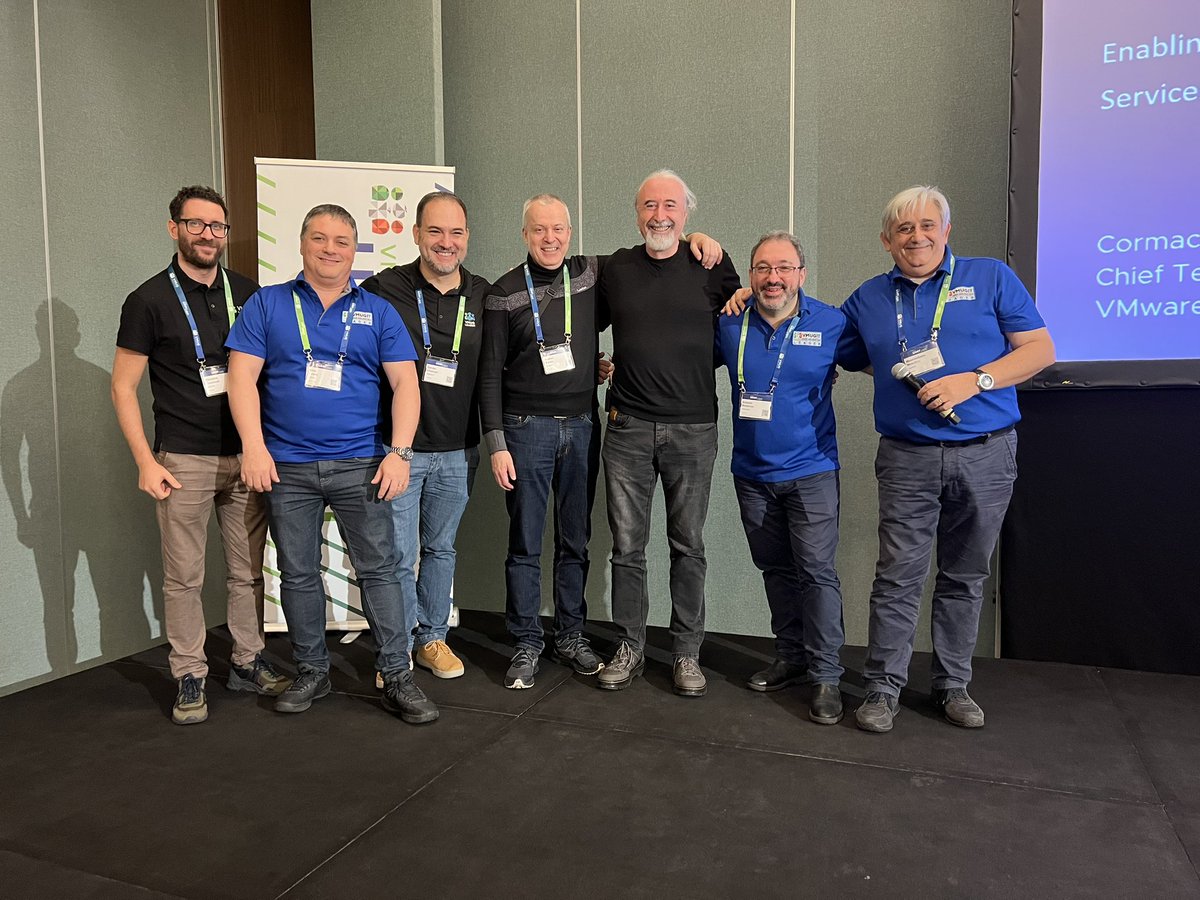
2025 will be my last year as Italian Leader of the VMware User Group. This decision comes with deep gratitude. The Italian VMUG community has played a fundamental role in my journey, both professionally and personally. Events, sessions, discussions, and friendships have shaped my approach to technology, leadership, and community building.
Stepping back from the leadership role feels like the right moment to evolve and contribute differently, while making space for new voices and ideas. At the same time, I’m not stepping away from the community: I remain open to creating content, sharing experience, and contributing where it makes sense.
Here, I want to personally thank the Italian VMware Users Group, past and current leaders alike. Since 2015, I’ve found the energy, connections, and opportunities that have helped me significantly improve my career. None of this would have been possible without the people who, day after day, continue to make this community such a vibrant and welcoming place.
My thanks also go to the VMUG headquarters and to the VMUG communities across the world. Being part of a global network that shares knowledge, experience, and passion has been truly invaluable.
Communities grow through people who stay engaged, not through titles.
AI Infrastructure Field Day 2: Silicon Valley, sustainability, and exposure
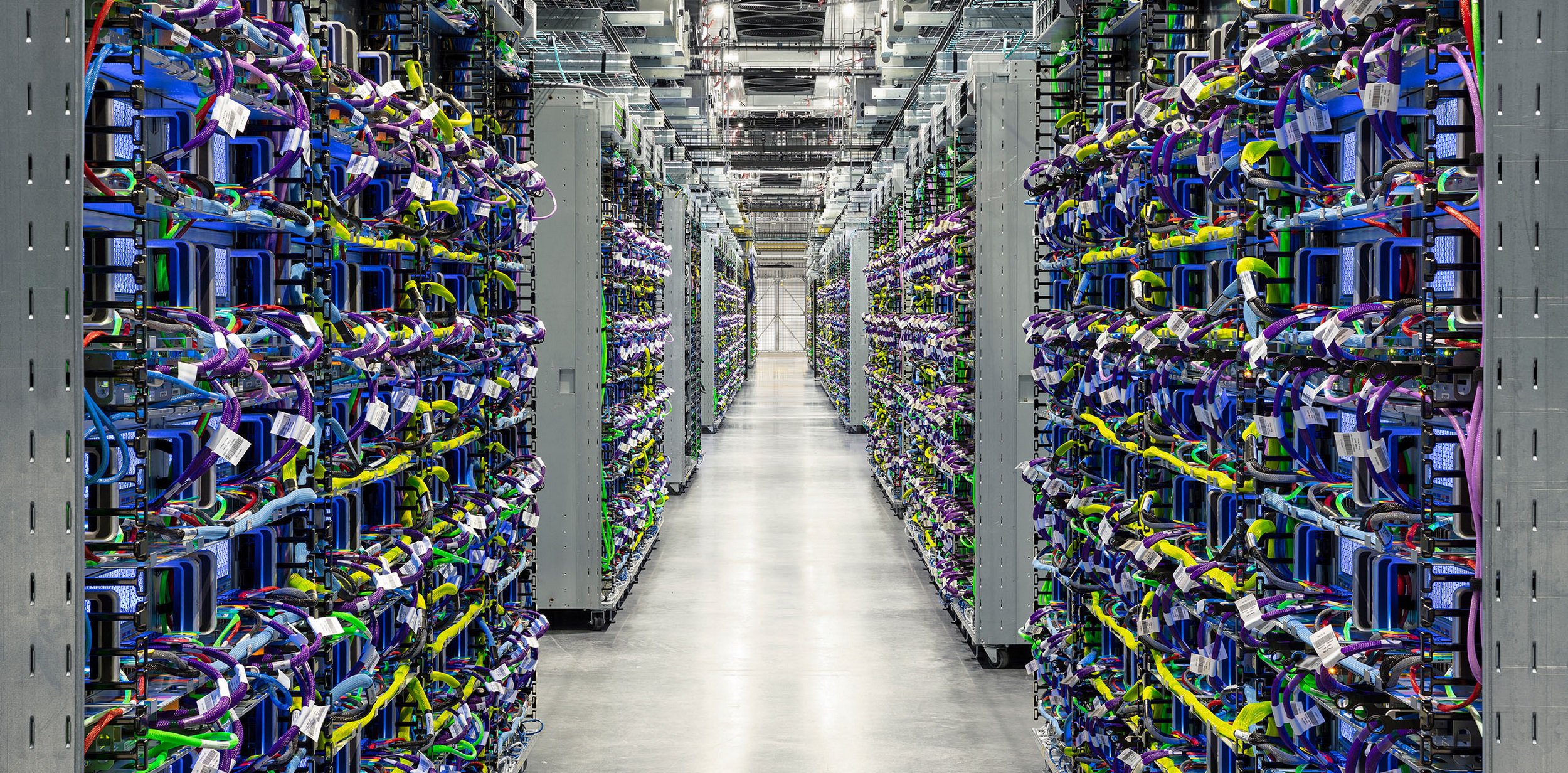
One of the most impactful experiences of the year was AI Infrastructure Field Day 2, organized by the Tech Field Day and hosted in Silicon Valley.
Across the sessions with multiple vendors, a common thread emerged around AI infrastructure sustainability. Different approaches, architectures, and accelerators were presented, each with its own trade-offs in terms of performance, efficiency, and operational complexity. Within this landscape, the Google experience stood out for its focus on TPU-based architectures and energy efficiency at scale, with sustainability treated as an infrastructure design constraint rather than a marketing message.
At the same time, discussions across vendors highlighted a less visible but increasingly important aspect: vulnerabilities. As AI platforms grow in scale and specialization, the attack surface expands across hardware, firmware, orchestration layers, supply chains, and operational processes. These risks are not tied to a single vendor, but are systemic challenges that affect the entire AI infrastructure ecosystem.
What became clear is that performance and efficiency cannot be pursued in isolation. Hardware design, software stacks, workload scheduling, and security models must evolve together to reduce systemic risk. AI infrastructure responsibility, therefore, extends beyond sustainability alone: it includes understanding, exposing, and mitigating vulnerabilities introduced by complex, highly specialized platforms.
Neuro-inspired technologies and an open question
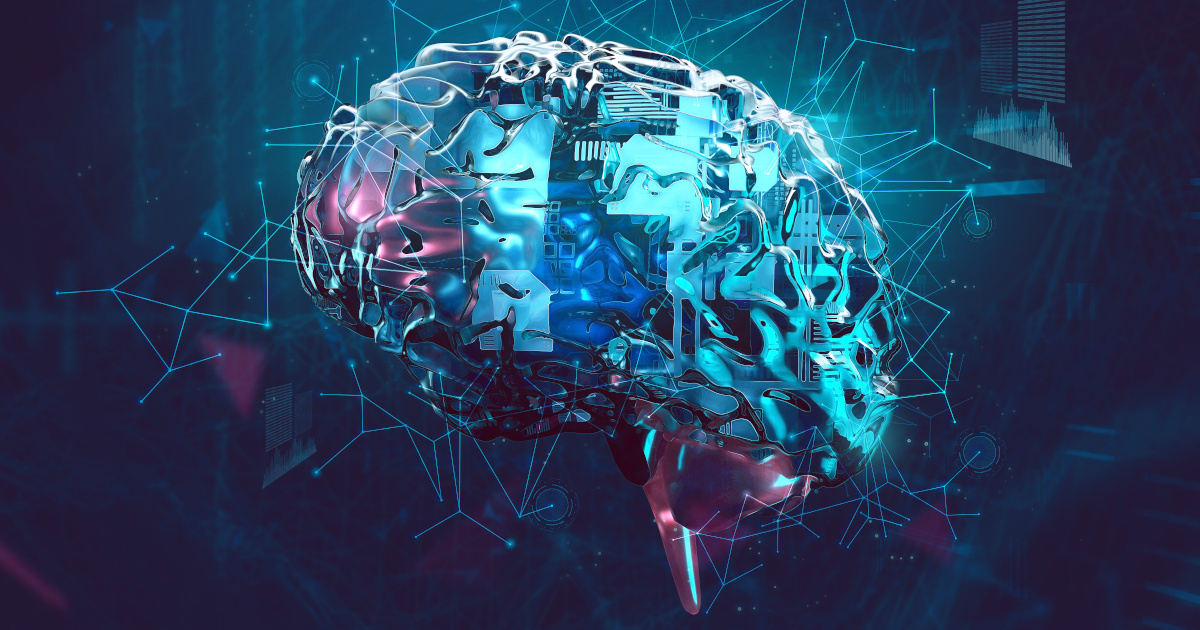 Alongside traditional AI infrastructure topics, some labs and discussions explored neuro-inspired and neuro-interface technologies. These experiments are fascinating, pushing the boundaries of how computation, cognition, and biology might intersect, but they also raise ethical and societal questions that cannot be ignored.
It’s no secret what is happening around the world regarding the experimental use of neuroids (artificial neurons designed to mimic biological brain functions) to enhance Artificial Intelligence. The field has evolved into a robust discipline known as NeuroAI, where neuroscience and AI development are deeply intertwined. I never put my “fingers” on these interfaces. Still, I’m not excluding the opportunity to start new research that, for me, is enhanced by my old knowledge in biology and organic chemistry.
I don’t want to fantasize about it, but while we discuss AI sustainability and the deep integration of synthetic brains into everyday life, researchers are growing the hype around alternatives to silicon and high power consumption. Wow! It seems that we are approaching what Isaac Asimov once imagined with the concept of the positronic brain. And if so, are we designing with the same sense of responsibility? Do we fully understand the long-term implications?
There are no definitive answers yet, but asking the questions is already part of our responsibility.
Teaching, writing, and looking ahead
Alongside industry and community work, I continue my role as a lecturer and content creator, focusing on platform engineering patterns, secure automation, and infrastructure responsibility in an AI-driven era without forgetting my teaching opportunity at Università Cattolica del S. Cuore, which is confirmed also for Academic Year 2025-2026.
2025 is about continuity with intention: closing a leadership chapter, strengthening platform strategy through people, and staying open to meaningful contributions ahead.