

A few months have passed since Mia-Platform’s important event brought together customers, partners, technology leaders, and practitioners to discuss how Platform Engineering, Cloud-Native technologies, and Artificial Intelligence are reshaping the way organizations build and deliver software.
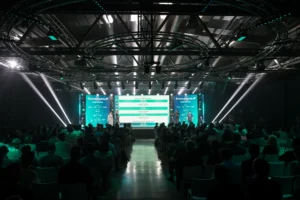
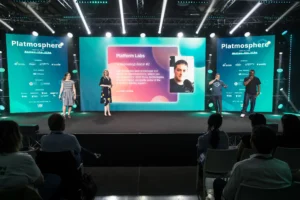
This year, I had the pleasure of serving as one of the Masters of Ceremonies, with a particular focus on the Platform Lab Track, where speakers moved beyond slides and theory to showcase practical experiences, real-world implementations, and lessons learned directly from the field.
The event theme, “Master The Vibe,” perfectly captured one of the most relevant challenges: how to transform the incredible speed and creativity enabled by AI into a sustainable, scalable, and governed software delivery model.
While I spent much of the day supporting the sessions and engaging with attendees, I also had the opportunity to gather several key insights that are worth reflecting on as we look toward the future of software development.
AI Coding Needs Context
AI agents, natural language interfaces, and code generation tools are enabling developers to transform ideas into working software faster than ever before. What many refer to as “vibe coding” or “speculative programming” is already producing significant productivity gains across the industry. Yet speed alone is not enough.
 As AI-generated code becomes increasingly prevalent, organizations face new challenges around governance, security, compliance, data sovereignty, operational control, and cost management. Enterprise software delivery requires more than a capable model: it requires context, trust, and accountability.
This is why standards such as MCP (Model Context Protocol) are attracting growing attention by providing a common framework for sharing context among AI systems. MCP helps agents reason, act, and collaborate with greater consistency and reliability.
One of the most significant announcements at Platmosphere 2026 was the evolution of Mia-Platform 15 (released July 16th). By combining AI-assisted development capabilities with Data Forge and the platform’s integration ecosystem, Mia-Platform is creating an environment where AI operates within well-defined boundaries, leveraging enterprise knowledge, governance mechanisms, and operational controls.
The goal is not simply to generate code faster, but to enable organizations to build software safely, efficiently, and at scale.
Learning from the Platform Lab Track
One aspect I particularly appreciated throughout the Platform Lab sessions was the pragmatic approach shared by every speaker. Rather than focusing on abstracted scenarios, presenters demonstrated how Platform Engineering and AI are already delivering tangible value inside real organizations.
 From Vibe Coding to Vibe Engineering
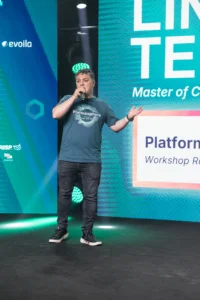
One of the most interesting sessions was delivered by Nicola Campagna and Alessio Bertazzo, who explored the evolution from Vibe Coding to Vibe Engineering. Their message was straightforward: AI can dramatically accelerate software development, but scaling AI adoption requires much more than code generation.
Organizations need platforms capable of providing trusted context, governance, security, and operational consistency. The transition from Vibe Coding to Vibe Engineering represents the shift from isolated experimentation toward a structured environment where AI, data, and software delivery processes work together within controlled boundaries.
Building AI on Top of Trusted Data
Another insightful session was presented by Alberto Tessarotto and Umberto Toniolo, who examined the journey from fragmented data architectures to a modern Data Fabric approach. Many organizations still struggle with disconnected systems, isolated teams, and inconsistent data distributed across multiple platforms. These silos create significant barriers not only for analytics but also for AI initiatives. The session highlighted how Data Fabric enables organizations to create a unified and governed data ecosystem, improving discoverability, accessibility, and trustworthiness of information. A particularly important takeaway emerged clearly: <<AI readiness starts with data readiness>>. The effectiveness of any AI solution ultimately depends on the quality, consistency, and governance of the data that feeds it.
The Agent Train Method
Probably the most engaging session of the day was “The Accord: The Agent Train Method for Production AI” presented by Grace Torany.
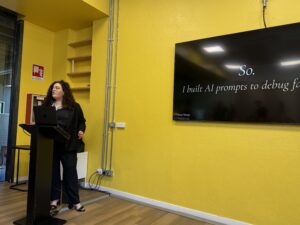
Rather than beginning with architecture diagrams or theoretical concepts, Grace shared a relatable real-world story. Faced with a CI pipeline overwhelmed by failures and a request to “make AI help,” the journey initially followed a path familiar to many practitioners: a giant prompt that generated unreliable outcomes, followed by a single AI agent that worked well at first but quickly exposed limitations in scalability, predictability, and operational costs.
The solution was the Agent Train Method. Instead of relying on one all-knowing agent, the workload is decomposed into a sequence of specialized agents, each responsible for a specific task, operating with clearly defined inputs, outputs, and contextual boundaries. Human approval remains embedded whenever sensitive or high-risk actions are involved. The key message resonated strongly: <<Trust in AI is built through composition, context, and control.>> By orchestrating multiple specialized agents rather than depending on a monolithic model, organizations can build systems that are easier to understand, debug, govern, and operate.
Innovation in Regulated Industries
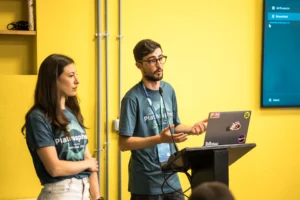 A special mention goes to speakers such as Davide Calabrò and Roberta Egoriti, who provided valuable insights into the realities of innovation within highly regulated industries.
Their experiences demonstrated that innovation is not about bypassing regulations, but about designing platforms and processes capable of accelerating change while remaining compliant, secure, and auditable.
The day was then rounded out by valuable contributions from Roberto Brogi, Gabriele Cavigiolo (Orbyta), and Marco Di Martino (Evoila), who brought additional perspectives on platform adoption, cloud-native practices, and enterprise transformation, especially in the FinOps and Observability area.
All sessions’ on-demand videos are available in the content hub of the official site: https://platmosphere.com/content-hub
The Future Is Not AI Coding Alone
Looking back, one thing became increasingly clear. Just a year ago, discussions around AI were dominated by predictions, uncertainty, and concerns about disruption. Today, the conversation has matured. AI coding is no longer viewed as a futuristic possibility: it is rapidly becoming a practical component of the modern software factory. Developers are using AI not only to accelerate code generation, but also to accelerate architecture design, testing, documentation, troubleshooting, and operational activities.
However, the real transformation is not AI coding itself. The future belongs to organizations capable of combining AI, trusted data, governance, platform engineering, and operational excellence into a coherent delivery model.
In this context, Mia-Platform is positioning itself as an important enabler of that journey, providing the context, integrations, and governance needed to transform AI from an interesting tool into a reliable enterprise capability.
Final Thoughts
A huge thank you to the organizers, speakers, sponsors, partners, and attendees who contributed to making Platmosphere 2026 such a successful event. The discussions, energy, and knowledge sharing throughout the day reinforced a message that goes far beyond technology itself: Platform Engineering is about empowering people and teams to innovate faster, collaborate better, and build software that delivers real business value.
And if Platmosphere 2026 showed us anything, it is that the future will belong not simply to those who use AI, but to those who learn how to govern it, contextualize it, and integrate it into their platforms effectively.